


Today’s industrial and commercial facilities are under increasing pressure to balance massive utility demands with strict efficiency targets and corporate sustainability goals. In off-site construction, this balance heavily influences the selection of heating and cooling equipment as part of the Central Utility Plant (CUP) design for any given project. This is particularly relevant as larger data center or industrial projects are developed in areas with power or water supply limitations (see our comparison of chilled water options).
This month we examine the benefits of Epsilon’s vendor agnostic approach as applied to energy concerns for new projects.
Evaluating Energy Demand and Efficiency – One significant driver in CUP design is the specific power requirements and efficiency profiles of equipment – with particular emphasis on chillers, boilers, pumps, and cooling towers. By remaining vendor-agnostic, Epsilon can compare these profiles across various manufacturers to optimize overall plant power consumption. This is exceptionally critical for energy-intensive market sectors, such as AI data centers and mega-scale industrial plants, where minor efficiency gains translate into massive long-term operational savings – not to mention dictating peak power requirements for the site.
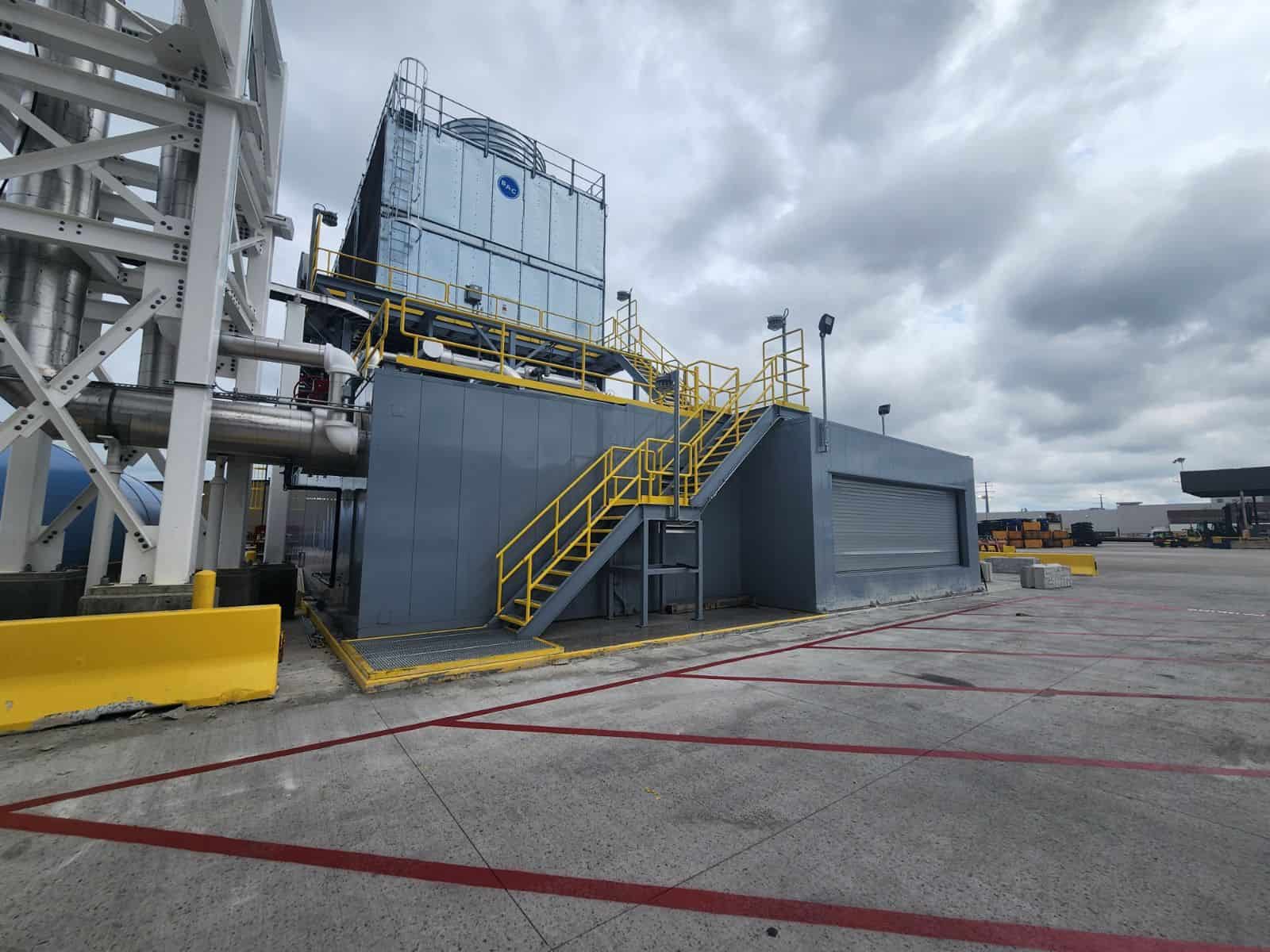
Refrigerant Impacts on Equipment Selection – The choice of refrigerants can fundamentally impact which equipment is selected. For industrial clients or those with aggressive sustainability goals, ammonia is an increasingly attractive option due to its high energy efficiency and exceptionally low Global Warming Potential (GWP) and Ozone Depletion Potential (ODP). However, ammonia requires selecting specialized chillers that can cost up to twice as much as their synthetic-refrigerant counterparts. Furthermore, because ammonia is highly toxic, the chosen equipment must be paired with enhanced ventilation, adding complex space requirements to the modular CUP footprint.
Adapting to Dynamic Load Demands – Different market sectors impose unique operational stresses on utility equipment. In pharmaceutical manufacturing, for instance, process loads can be highly dynamic. For a Boehringer Ingelheim facility, Epsilon had to select and configure equipment capable of maintaining a steady 27°F entering water temperature despite drastic, short-term swings in load. By carefully analyzing the process data and strategically relocating a 45,000-gallon thermal storage tank, the team was able to design a CUP with equipment that provides stable cooling while safely reducing the total required plant capacity from 1,500 tons to 1,000 tons.
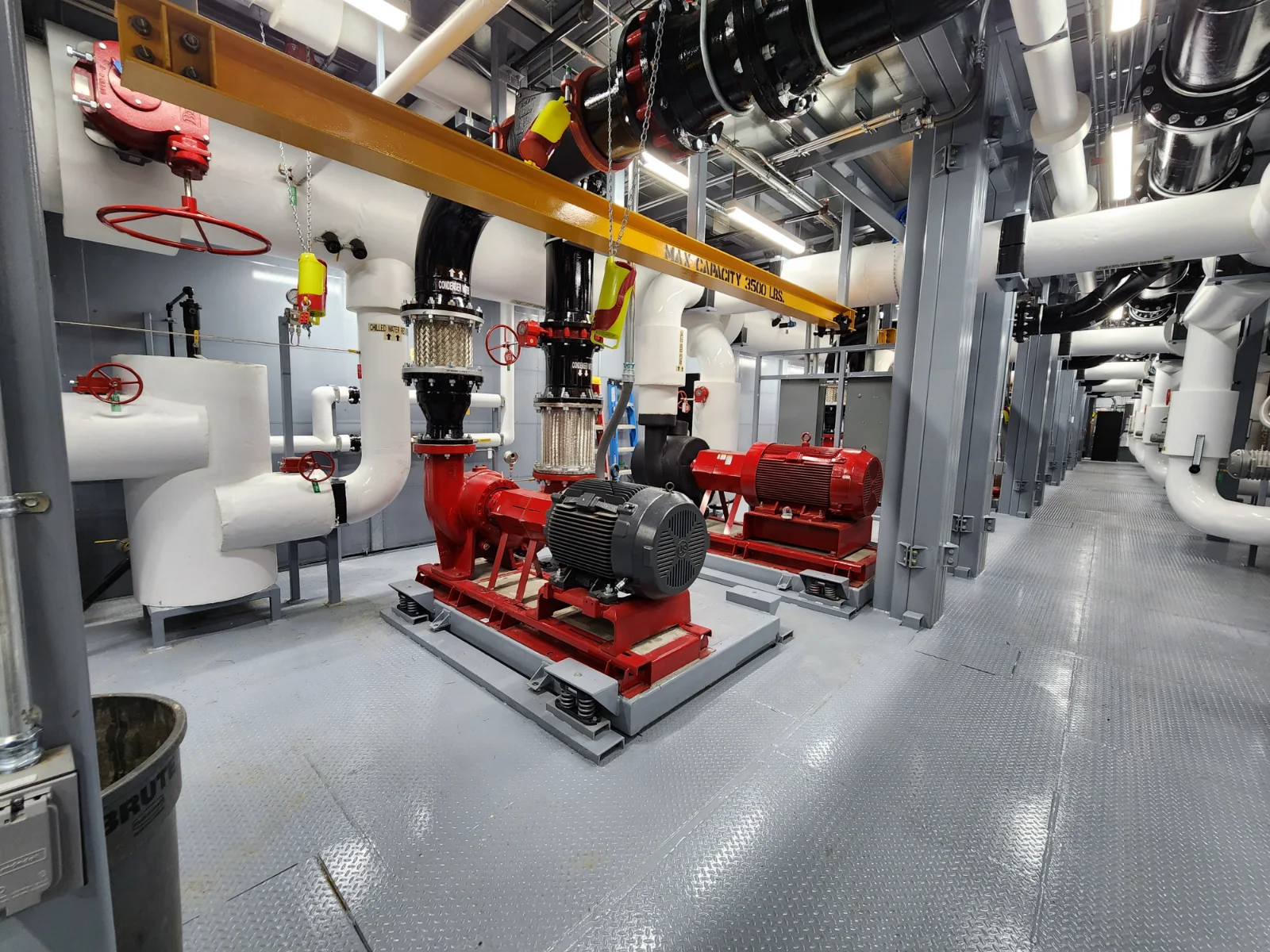
Designing for Fuel Flexibility – Vendor neutrality also allows for creative, hybrid equipment integrations that maximize energy resilience. For the Holy Cross Health medical center, Epsilon combined water-to-water heat-pump chillers with premium-efficiency dual-fuel (oil and natural gas) condensing boilers. This innovative, mixed-manufacturer approach provides hospital staff with the flexibility to generate hot water using three distinct energy sources—natural gas, oil, or electricity—ensuring continuous operation during a crisis while optimizing fuel costs based on market conditions.
Achieving a facility’s strict efficiency targets and sustainability goals shouldn’t be limited by a single manufacturer’s product line. An Epsilon vendor-neutral strategy and design empowers owners to integrate the most appropriate technologies available in a manner that makes sense for the location, site footprint, project scope and budget—whether that involves specialized low-emission refrigerants like ammonia, dynamic load management, or hybrid, multi-fuel heating systems—to create a highly resilient, energy-optimized plant. Reach out to the Epsilon team today to discuss how vendor choices can impact your Central Utility Plant project plans.